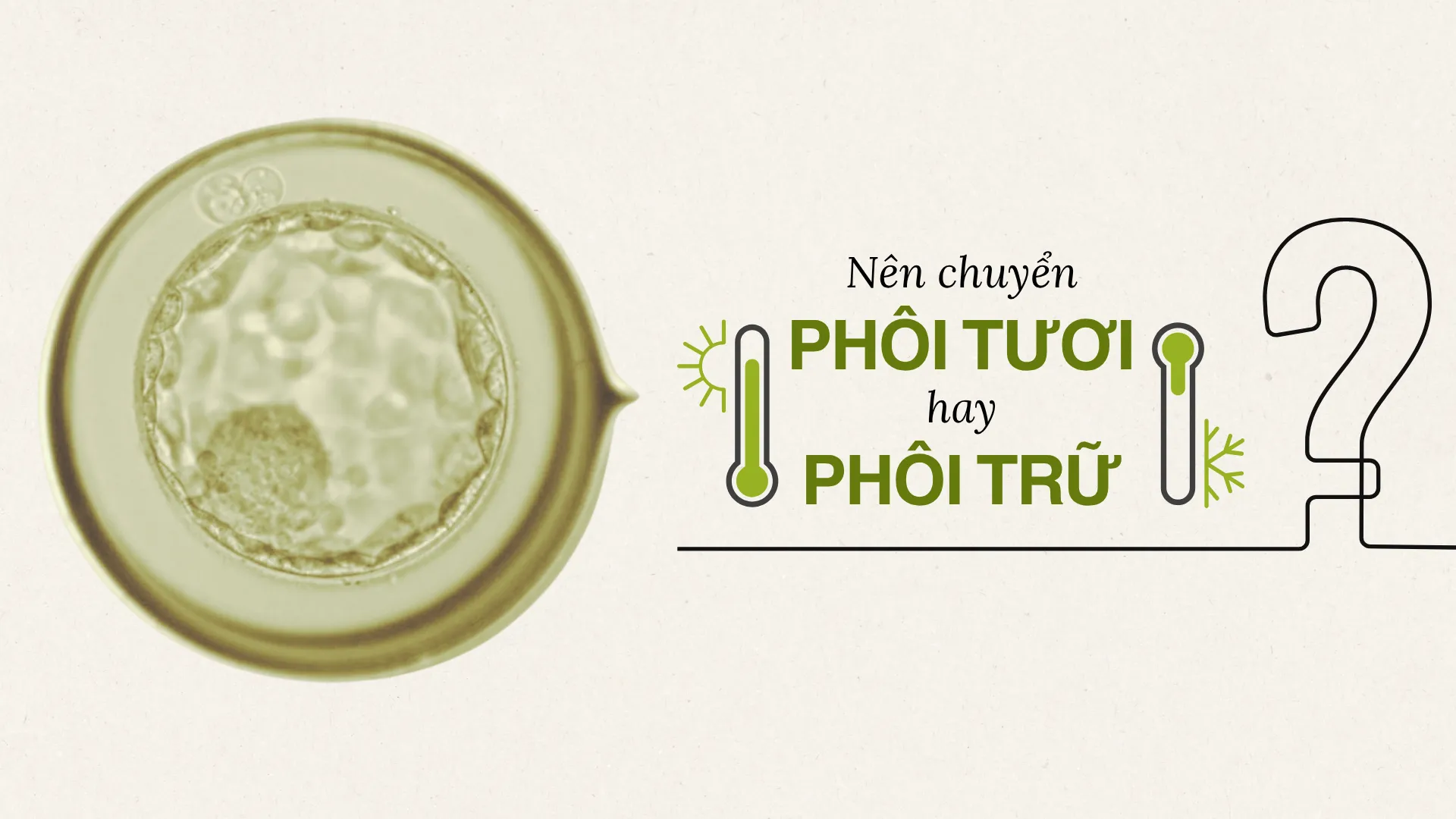
When embarking on the in-vitro fertilization (IVF) journey, one of the crucial decisions couples face is: Should they transfer fresh embryos or frozen embryos?
Each method has its own advantages, and the right choice should be personalized based on health status, treatment plan, and family wishes. Let’s explore this further with Olea Fertility to understand which option is best for you.
Distinguishing between fresh embryo transfer and frozen embryo transfer.
Fresh embryo transfer: Embryos created from eggs and sperm, cultured for 3–5 days after egg retrieval, are transferred into the uterus within the same cycle.
Frozen embryo transfer: After culture, the embryos are frozen at -196°C using vitrification and transferred into the uterus in the next cycle, after the uterine lining has been thoroughly prepared.
Advantages of fresh embryo transfer
-
Time saving: An IVF cycle can be completed in about 1 month.
-
Reduced costs: No additional costs for embryo storage, thawing, or hormone therapy to prepare for the next cycle.
-
Advantages when the body is ready: Suitable if the wife has a stable uterine lining and is not overly stressed after egg retrieval.
However, fresh embryo transfer is not suitable if the uterine lining is not yet ready, or if the body has not recovered from the ovarian stimulation process.
Why is frozen embryo transfer becoming a trend at IVF centers today?
Olea Fertility typically prioritizes frozen embryo transfer in the following cases:
-
It takes time for the uterine lining to stabilize, reducing the effects of ovulation-stimulating drugs.
-
Embryos requiring post-implantation genetic testing (PGT) must be frozen before transfer.
-
The wife has polyps, uterine fibroids, fluid accumulation in the fallopian tubes, or other conditions that require treatment before embryo transfer.
-
Couples with a history of miscarriage, multiple IVF failures, or those needing additional psychological and financial preparation.
-
Preventive measures to improve fertility in cases of malignancy (cancer) or when entering the age of declining fertility.
The frozen embryo transfer cycle typically lasts 12–15 days, using medication to optimally prepare the uterine lining.
Is there a difference in success rates between fresh embryo transfer and frozen embryo transfer?
Many studies have shown that the live birth rate after fresh embryo transfer and frozen embryo transfer does not differ significantly, if the procedure is performed correctly and monitored carefully.
The most important thing is choosing the right time – the right body – the right treatment plan. Olea Fertility always personalizes treatment, listens to your body, and makes choices that optimize success rates and minimize risks.
There is no fixed answer to the question of whether to choose fresh embryo transfer or frozen embryo transfer. This decision requires careful consultation with a specialist and depends on each individual case. The Olea Fertility team always prioritizes your safety, effectiveness, and experience.